
Year One of Falcon On-Farm
–Mandi Caudill
Head of Science and Research
What’s easily measurable is rarely the same as what’s really valuable.
– C. Thi Nguyen
I came across this quote the other day and it really struck me. Sometimes it feels like we are swimming upstream in our approach to Falcon On-Farm – the current seems to be flooded with agendas and key performance indicators (KPIs) to provide measurements to prove there is movement, that there is progress, to show that money is smartly invested. Which is hard to argue with – of course, those all make logical sense. But we don’t want to waste time and resources just measuring things to measure them, knowing that they aren’t really that valuable at all.
This is the stance that Falcon has taken for Falcon On-Farm. No KPIs, our findings will be open source, fostering an environment of continuous learning. We think this is so important to protect the authenticity and integrity of the work. We don’t know how all of this is going to unfold – but we are already learning a lot.
July marked one year into Falcon On-Farm. The summer months last year were spent in preparation mode – outlining and designing the project, putting the team together, creating selection criteria for the farms that would participate, interviewing producers and selecting the farms that would be a good fit for the project.
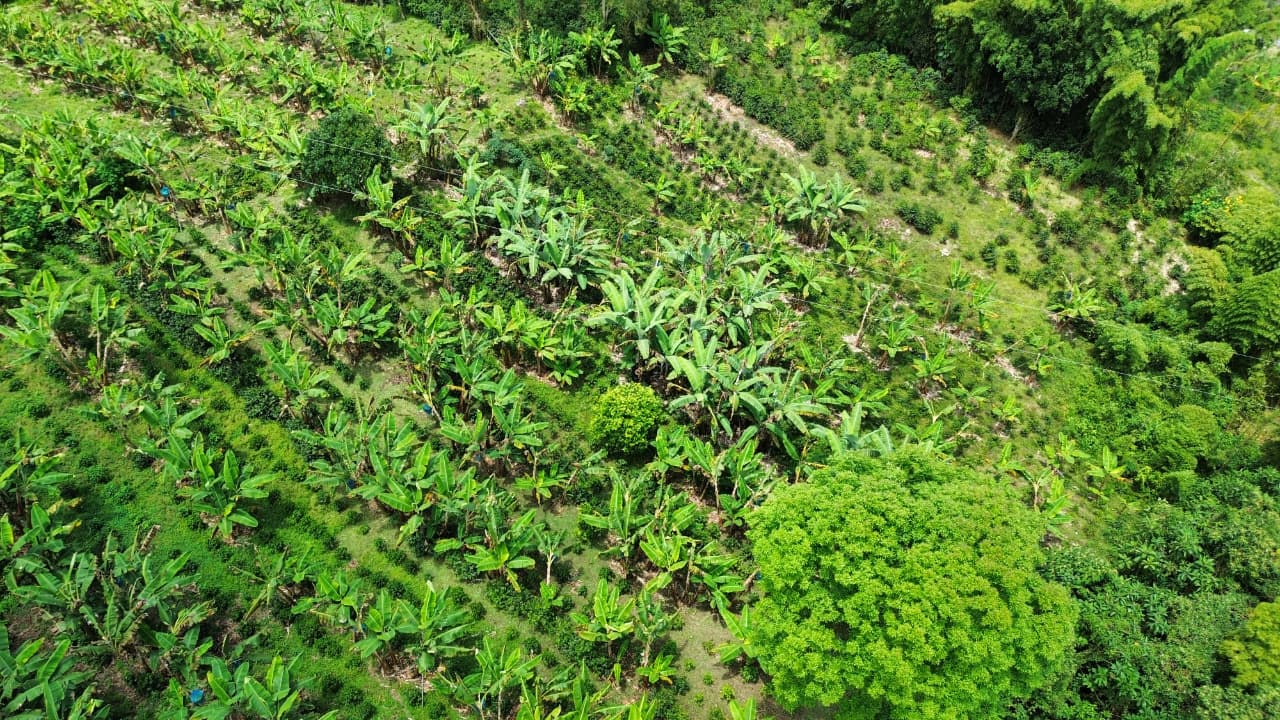
In the fall, we began collecting all the baseline data. This included interviews with the farm owners to understand their management practices, yields, challenges and goals for their farms. We collected data to calculate farm-level greenhouse gas emissions. We measured the vegetation structure in the farms (i.e., canopy cover, ground cover, shade tree size and species). We set up camera traps in each of the farms and hired an ornithologist to do bird count surveys and set up recording devices for bird calls. We conducted site assessments as a team, walking the farms with the owners and asking yet more questions and taking soil samples for both chemical and biological analysis.

Falcon Coffee Peru team and myself captured on the camera trap while setting it up in one of the farms
The winter was spent pulling all of the information gathered together from the baseline assessments, soil analysis and site visits. From this, Sam made assessments of the current conditions for each of the 6 farms participating in the study and provided step-by-step recommendations for how the farm can reach its full biological potential through regenerative practices (the summaries of which are posted on the website)
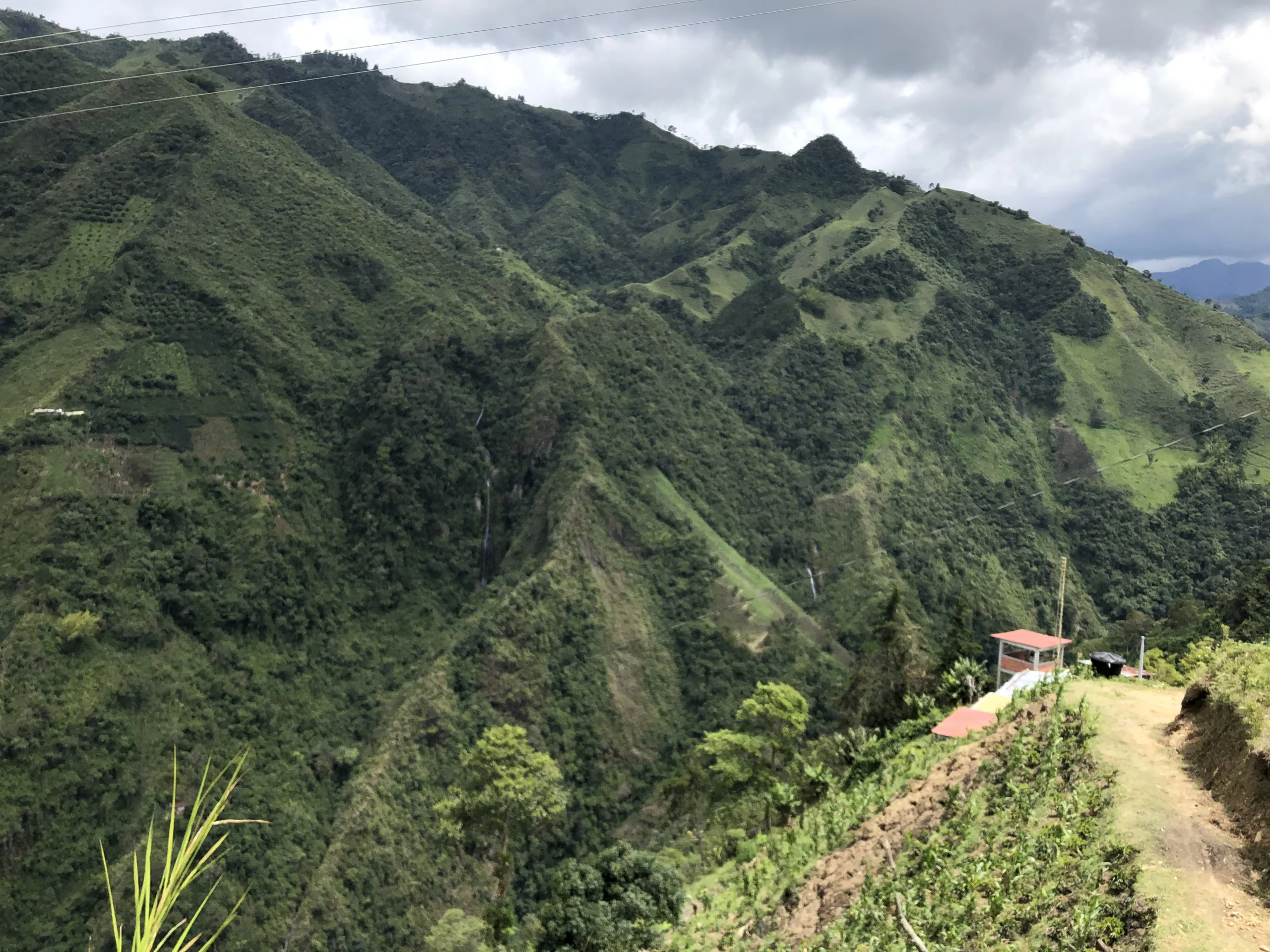
In the spring, the findings and recommendations were shared with the producers in Colombia. We had a few Zoom calls to present the findings and answer questions and then Sam and the team went to visit with the producers again in person on their farms.

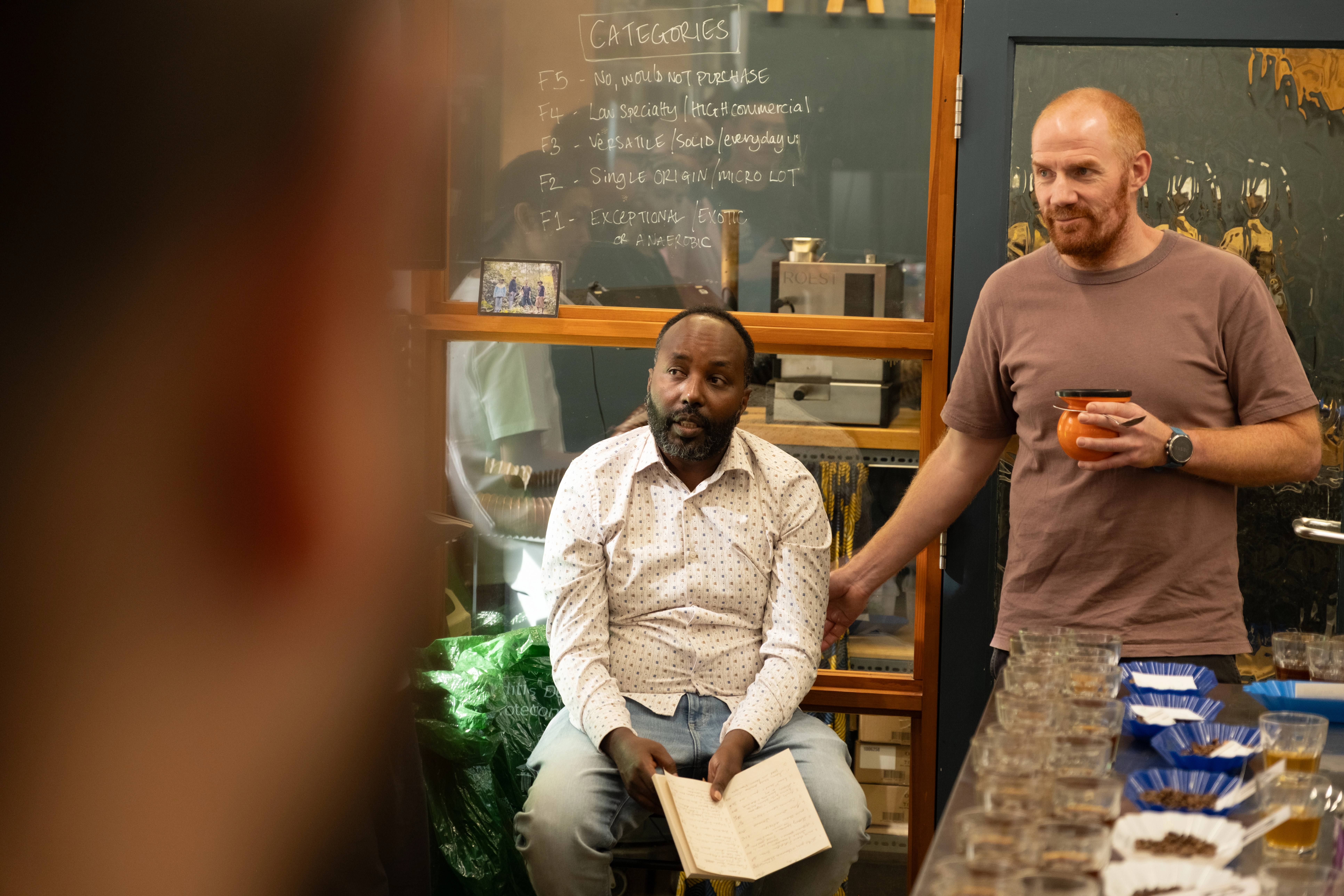
Field crew with Siruma, Falcon and Sam speaking with one of the producers on their farm in Colombia
It is an iterative process with lots of back and forth between Sam, the agronomists and the producers – making sure everyone is on board and comfortable with the process. These are new techniques with different inputs and doses than are typically used – so there is a lot of relationship building and trust that is needed- something not typically written down on checklists of tasks and milestones, but equally important to the success of this regen ag transition. During one of the meetings there was a comment like, this is interesting…but not how we usually do things. I detected a bit of concern in their voice. It is a leap of faith and trust in this process that is unfamiliar. Sam, who has a lot of experience with regen ag, provided quiet reassurance – “It is worth trying something new. We will be monitoring the progress, seeing what works and what doesn’t, and then adapt.”
Which brings us to this summer already. This month, we shared the assessments and recommendations with the Peru producers. (The timeline for the Colombia sites and the Peru sites is staggered with Colombia about 4-5 months ahead of Peru.) This week, we are holding a workshop with our team in Peru and the producers involved with the project. The workshop will cover more broadly how regenerative agriculture works in coffee and then the specific findings and recommendations for each farm and allow the producers to discuss and share information.
And just yesterday, we received pictures from the farms in Colombia where we are breaking ground on the implementation phase of the project!

Finally starting on the implementation phase with the first soil amendments added to the soil under the coffee plants on one of the farms in Colombia
It finally rained a bit in that area- it has been super dry – and they were able to start applying the mixture of soil amendments outlined for each farm.
Here we go!