I find nature fascinating. It is this living organism full of complex relationships and interactions – synergies that are all around us that we don’t notice or some taking place in dimensions too small for the eye to see. Coffee farms are part of nature, albeit managed nature (some more managed than others), but nature nonetheless. The ecological relationships that play out in coffee farms can influence multiple aspects of the agroecosystem like overall health of farm, crop productivity, resilience or susceptibility to weather events, pests and diseases and coffee quality, to name a few. But how does this work?
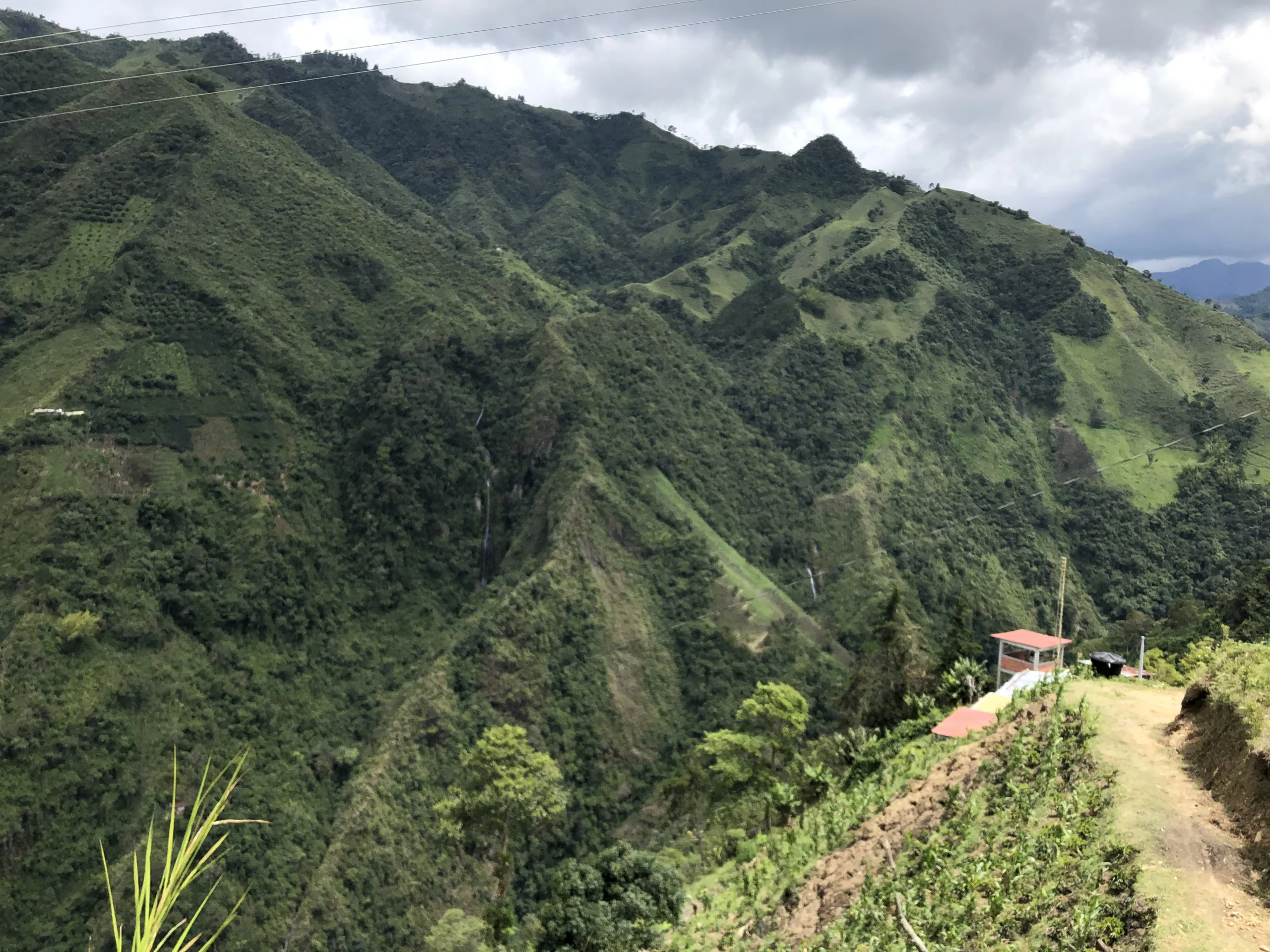
On the broadest, most zoomed out level, large-scale landscape interactions have influence on one another. Wildlife on coffee farms is impacted by landscape attributes – things that are present or happening adjacent to the farm like proximity to forests, streams and rivers, highways – even adjacent farms with different management practices. Imagine that there is a farm that doesn’t use a lot of agrochemicals that has great habitat for wildlife with different species of trees and other plants and vegetation – but a highway borders one side of the farm and then then the surrounding farms use heavy doses of synthetic chemicals and pesticides. Our farm in the center is a habitat island and may not attract or invite wildlife because of the interactions taking place in the broader landscape
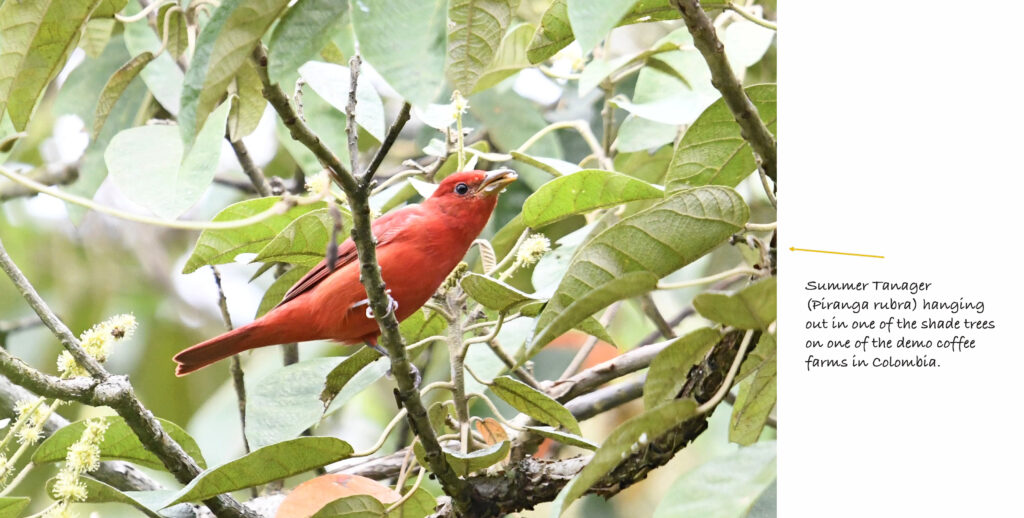
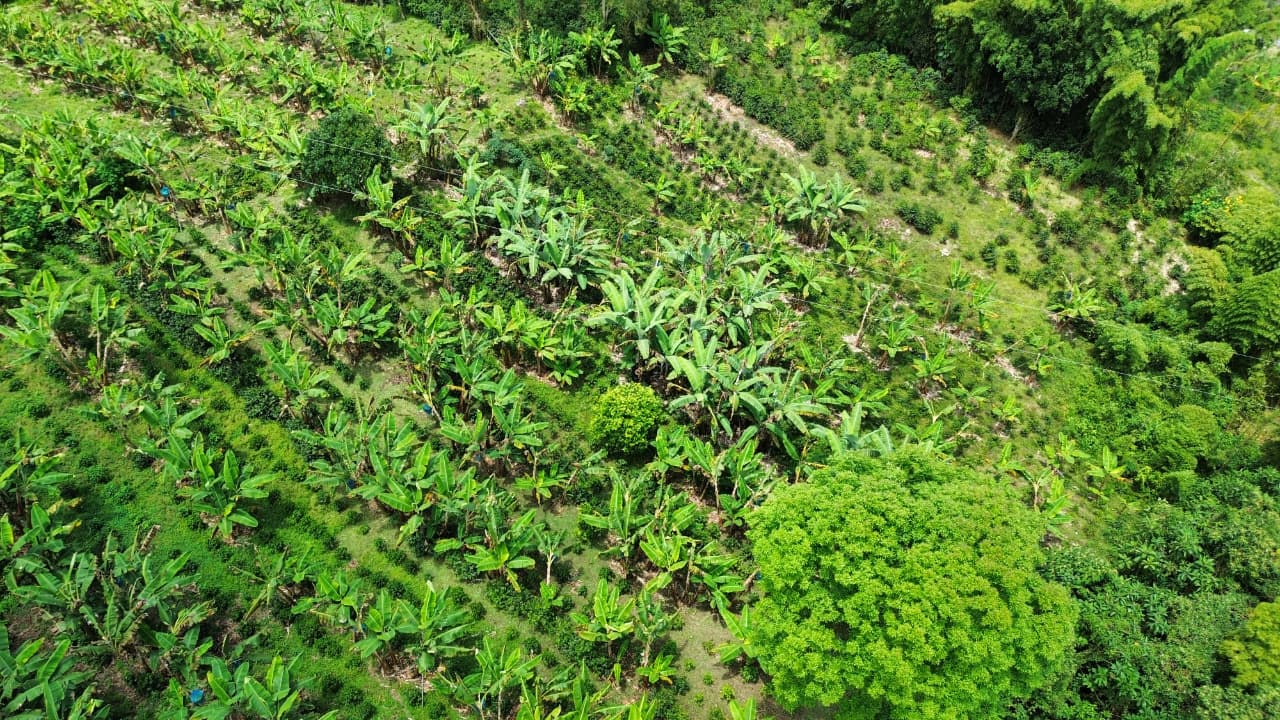
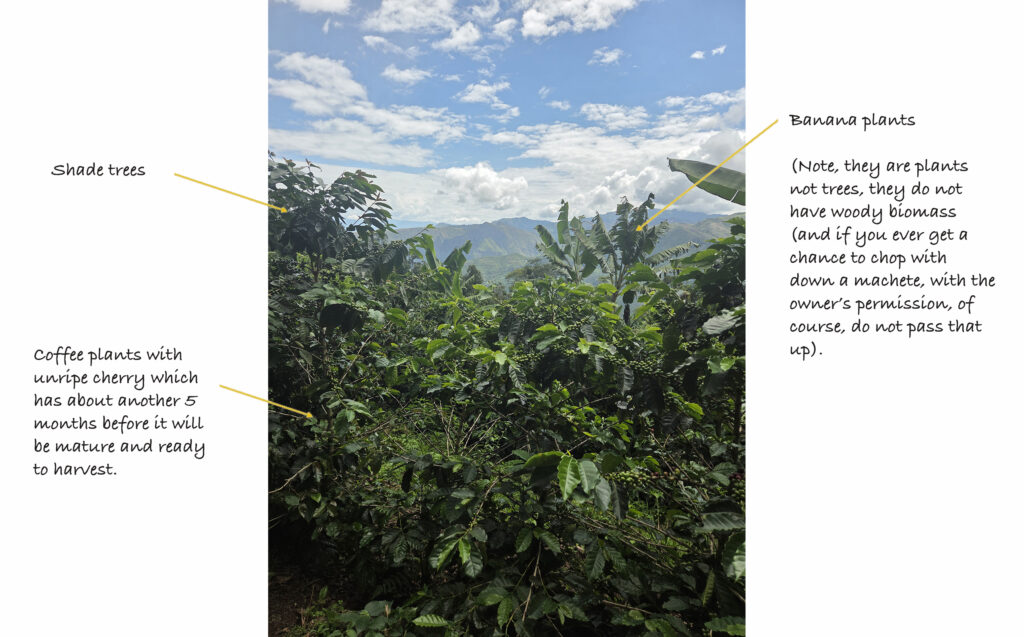
Zooming in a level, we can look at the relationships among the plants on the farm. A good example of this is the shade trees planted in around the coffee farm and how they interact with the coffee plants. Shade trees provide a wide range of benefits to the coffee plants like protection from extreme weather, reduction in soil erosion, addition of nutrients to the soils which in turn provide nutrients the coffee plants, habitat for birds and other wildlife which then contribute to pest management, pollination and soil aeration. Not all aspects of shade trees are beneficial though – some species can compete with the coffee plants, so trees need to be selected wisely. Too much leaf cover (aka shade cover) can also have detrimental impacts to the microclimate and yield of the coffee if not managed properly. There is a balance to be achieved so that nature is supporting the production and health of the coffee crop.
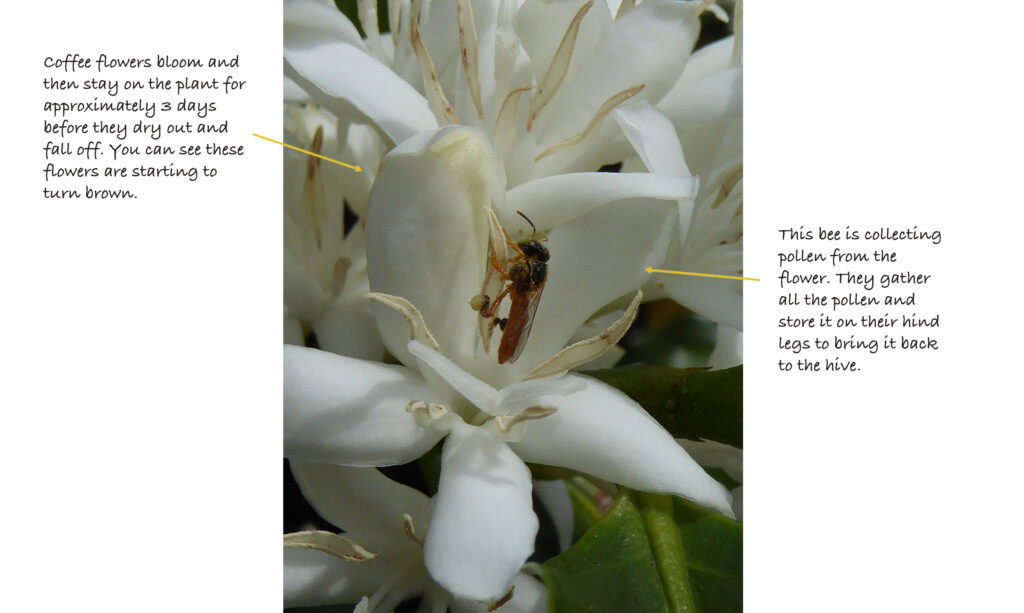
Zooming in a bit further, we can look at insects which can both help and harm the coffee plants. Bees, for example, pollinate the coffee plants. Arabica is self-pollinating, it does not need external pollinators for the coffee to flower and fruit – however, if there are pollinators, the yields have been shown to increase anywhere from 10-50% based on multiple academic studies. But then there are those insects that can harm the coffee plants – pest species. One of the farms that we are working with for this project has been having issues with the red spider mite (also just called “red spider” but it is not a spider, it’s a mite) which is a pest that thrives in dry unshaded farms and eats the coffee leaves, reducing photosynthesis and lowering coffee yields. In addition to providing more shade with trees, we will also be creating habitat to support the predatory mite populations which will keep the red spider mite in check. These types of insects are called “beneficial insects” or just “beneficials” for short (keep that in mind for later posts to come).
At the smallest, most zoomed in level, interactions are taking place that cannot even be seen with microscope. These are things like micro and macro nutrients in the soil that provide plant nutrition, microorganisms (they can probably be seen with a microscope) and then even smaller down to atoms, molecules and ions, and cation exchange. (Who remembers their high school chemistry? My memory is definitely hazy…) This level of interactions is the one that I know the least about but am learning more from Sam Knowlton and starting to understand how significant it is for the farm health.
The biochemistry happening in the soils impacts the ability of the coffee plants to uptake nutrients. For example, cation exchange capacity (CEC, hear me out before your eyes glaze over) is an indication of the soil’s capacity to basically hold nutrients like calcium, magnesium and potassium so that the plants can use them. If the conditions of the soils are off, then they can’t provide that reservoir of nutrients, and the plants will not be able to efficiently uptake them – no matter how much fertilizer or other inputs are applied.
The keystone feature of regenerative agriculture is creating a healthy ecosystem that supports these naturally occurring beneficial interactions. None of these features exists on their own, they are all interconnected – physically, chemically, temporally. The descriptions I laid out are a simplified version of the intricacies of an agroecosystem. Nature is much more complex that I could ever get my head around, even having studied this for years – but how cool is that