Does Regenerative Agriculture Change What’s in the Cup?
–Mandi Caudill
Head of Science and Research
We have been busy organizing and summarizing all the data that we have collected in the first year of Falcon On-Farm which will serve as baseline data for which to compare each sequent year.
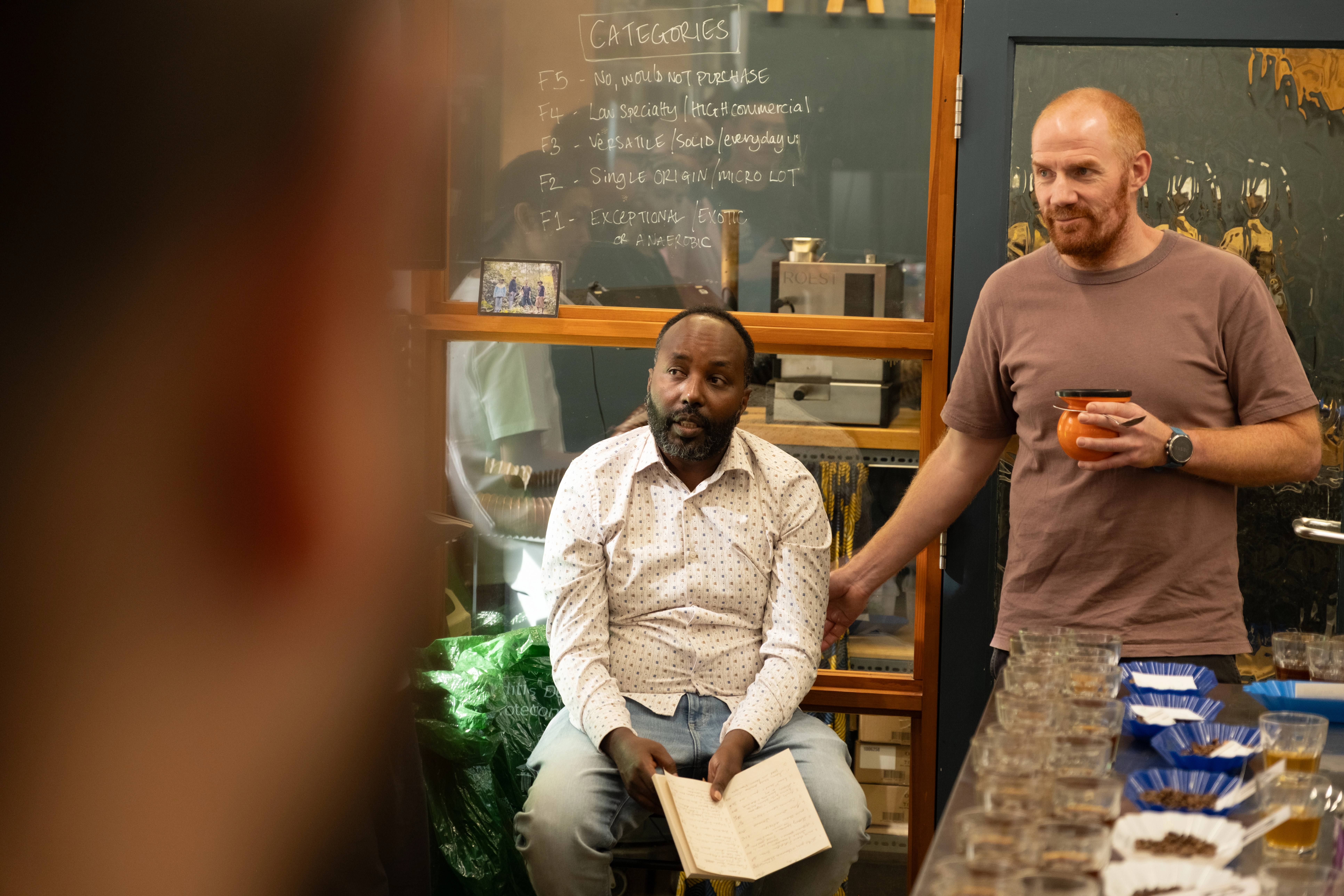
To understand and truly assess the impacts of regenerative agriculture, we are measuring and monitoring farm-level data like soil and plant health, biodiversity, fertilizers and inputs, emissions, productivity and costs. These are all important indicators of a healthy and resilient farm. But does regen ag have an impact on the quality of coffee in the cup? We don’t know…but we hope to find out. As part of the data collection, we added in coffee quality with cuppings to take place for each farm annually. Our QC team just cupped the first coffees from two of our Falcon On-Farm farms in Colombia.
Brian Speckman, who works for Falcon Specialty in Austin TX, was a part of that team and explained how it went in Falcon Specialty North Americas Newsletter.
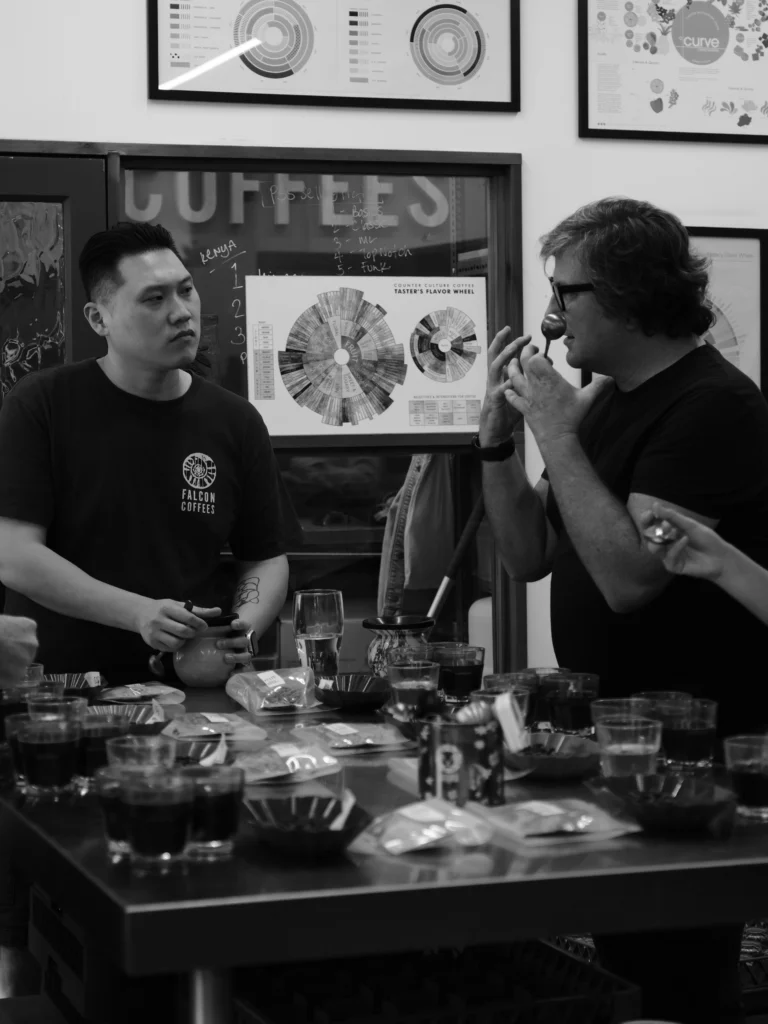
So, I am back from the QC and Specialty sourcing summit at our HQ in Lewes.
I went into the nuts and bolts of the QC summit in the last newsletter, but there were a few things that stuck with me after it took place.
It is a lot of work to send green samples to five different offices so that they can roast them in their style and then send them back, or bring them back to the UK. Cupping a whole table of the same coffees sample roasted by different offices in their respective labs was great.
I was honestly thinking there would be one set that auto-broke or was a 300% weight loss obsidian native American arrowhead or something. However, they were all very readable and hard to guess which was Probat BRZ and which was the Roest.
The QC from Malaysia, Will, said “This roast and that over there is my favorite because it’s mine.” Which I thought was really bold and cool, that he knew which were his (so he thought). I just tried to guess which was Roest and which was BRZ because in our lab that is pretty apparent, but I guessed wrong and so did Will, so they were all great and easy if anyone flies somewhere else and needs to make quick decisions or sub in for someone.
I had a big surprise with the Falcon On-Farm cupping. History on this: Sophie (head of QC) and I were in charge of coming up with the protocols that each farm would use for the next 5 years for harvesting their coffee from the 6 farms that are participating in Falcon On-Farm (3 in Colombia, 3 in Peru).
I got really specific with these protocols: picking the rows to make 10-15kg of green coffee, during second pass through the farm so it would be the peak of harvest, documentation of fermentation time, drying time, etc.
It was so detailed in order to hopefully create a blueprint that can be repeated for the next 5 years, and in the case of Colombia, ten times since they have 2 harvests a year.
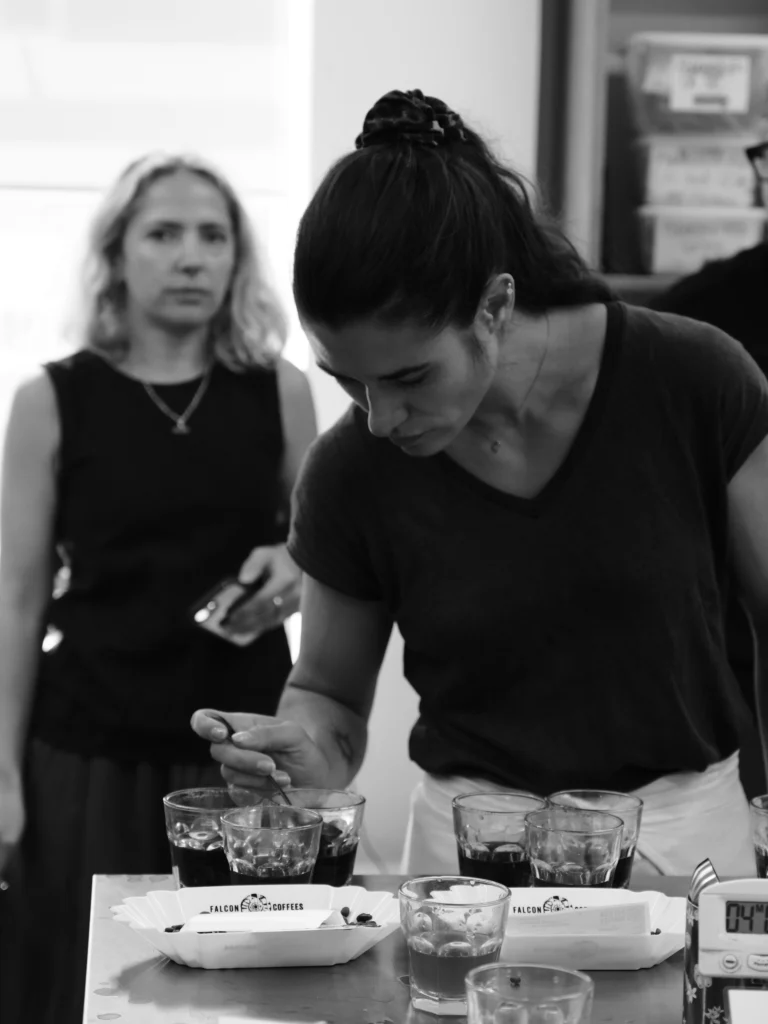
The unintended consequence of all this excitement, structure and support from agronomists and SAT test monitors, pencil sharpeners, calculators and futures hanging in the balance, came out in the cupping. The coffees were not just the 84-85 scoring coffees you would expect with regular processing from farms from these altitudes – they were 86+ and just clean, juicy, beautiful, almost micro lot quality.
I feel like all this focus and attention made the picking better, the processing more exact, and the drying better. Why is this a problem? These coffees are the control for the project: the baseline quality level when using current fertilizing methods taught by the FNC and built into the country from the variety on up.
Why is this potentially a “bad” thing? Maybe this sample is overstating the normal quality of the farm vs how they pick, process, dry, when doing the entire farm vs. a small bespoke lot.
Another potential issue is human nature. This is a 5-year project: will there be as much excitement, structure, and support for each harvest to try and keep the same standard as the first harvest? I think human nature says it will be difficult to maintain everyone’s attention at the same level for 5 years. On the plane ride home, I was thinking of ways to keep it fresh and fun and to try to surprise people into keep it new. A good challenge to have.
Cupping these coffees officially and putting our scores in the books at the QC and Sourcing Summit was really cool. I told people it’s like putting something in a time capsule. Our scores will be the standard that we cup coffees vs. for the next 5 years. And then when the project is done, we will put all the harvests out of frozen storage and cup the whole range which will be really fun. Maybe we will invite you to come by!
One of the things coming out of the event that we wanted to do, as we shifted to Roests in some of the offices, was to get a second BRZ Probat for Ethiopia, since they run the whole harvest off a 2-barrel BRZ and it gets pretty beat by the end and there is no redundancy.
So, we decided to airfreight a machine that was gathering dust in our Berlin office. Alex, the roaster from the UK flew to Berlin (preplanned but if you want it to be cooler you can miss these parentheses and think he flew out on a moment’s notice) and packed up the machine. I chatted with an Ethiopian exporter who also does logistics and hopefully the machine will get picked up next week and be at home before the real harvest work starts in Addis.
The feeling I had leaving the UK was one that I had before the pandemic. One of teamwork, understanding and respect, and the odd curveball that gets handled collectively quickly and efficiently. Feels like we can do some amazing things as a Specialty team in the years to come.
-Brian