What Is Regenerative Coffee? Part Two
-Sam Knowlton
Of the five principles introduced in Part One of What is Regenerative Coffee, cultivating soil as a living ecosystem occupies a position of fundamental importance. Canopy architecture, functional biodiversity, photosynthetic optimization, and the economic and social relationships surrounding a coffee farm all depend on the integrity of the biological networks operating in its soil.
Soil is one of the most biologically dense environments on Earth. A single teaspoon of healthy soil can harbor up to six billion microorganisms—a population roughly equivalent to the human race—comprising bacteria, fungi, protozoa, nematodes, and arthropods engaged in continuous exchanges that govern nutrient acquisition, disease resistance, and the biochemical expression of the coffee bean itself.
The more commonly known mycorrhizal fungi extend this functionality further. Coffee plants forming arbuscular mycorrhizal associations exhibit significantly higher phosphorus accumulation, increased potassium concentrations in foliar tissue, and substantial improvements in calcium and copper uptake, among other nutrients. Beyond nutrition, these fungal networks generate glycoprotein compounds like glomalin that bind soil microaggregates, stabilizing organic carbon and building resilience against drought and erosion. Conventional fungicide programs dismantle these networks, which is why farms running them require steadily escalating chemical inputs to compensate for the biological function they have eliminated.
Coffee plants actively cultivate this complexity. Research indicates that they allocate 30 to 40% of their photosynthetic output to root exudates, sugars released into the rhizosphere to sustain microbial populations. These exchanges drive a mechanism known as the rhizophagy cycle, in which symbiotic microorganisms alternate between free-living soil phases, where they scavenge for macro and micro nutrients, and intracellular root phases, where reactive oxygen species liberate those sequestered nutrients directly into plant tissues. In functioning soils, microbes themselves become the primary delivery mechanism for plant nutrition.
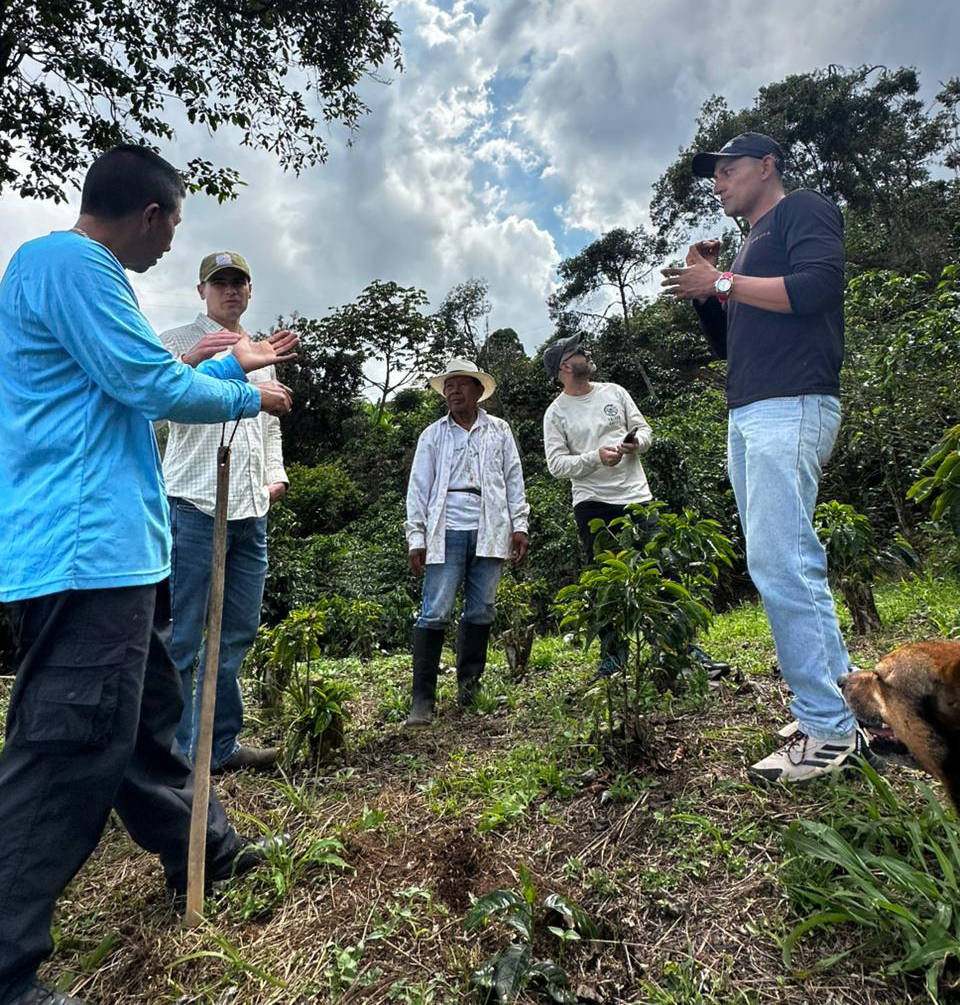
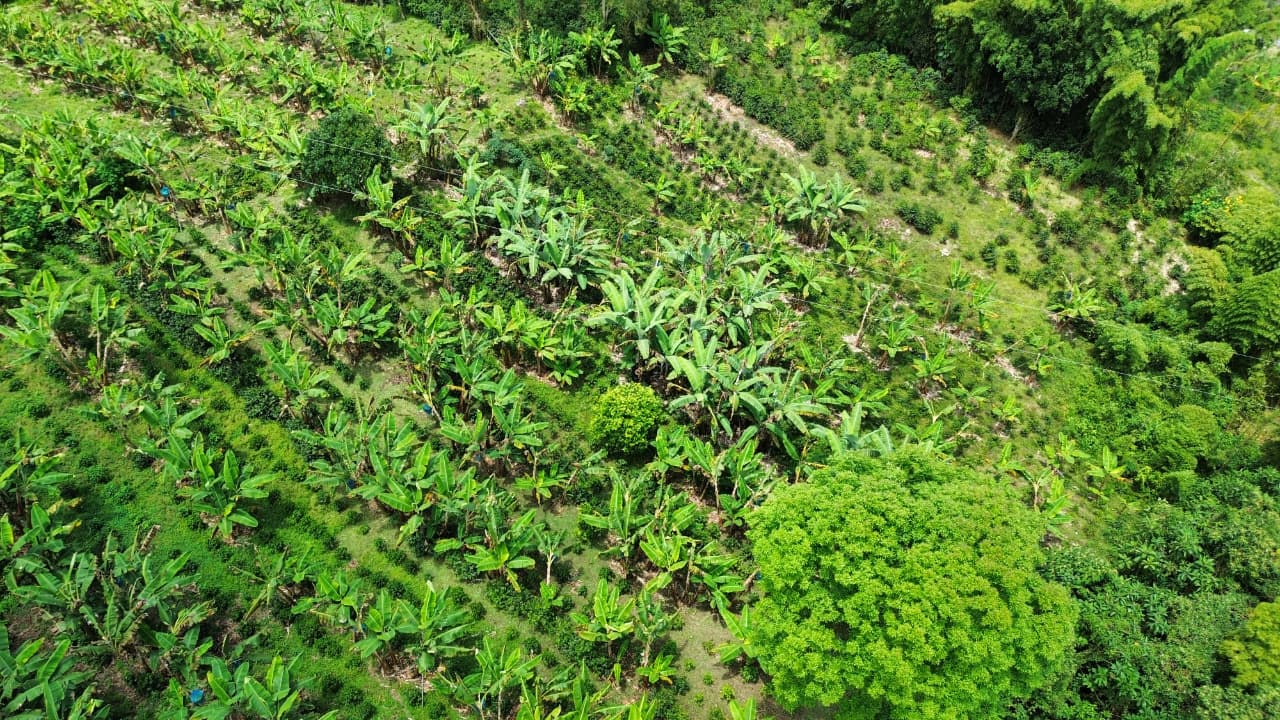
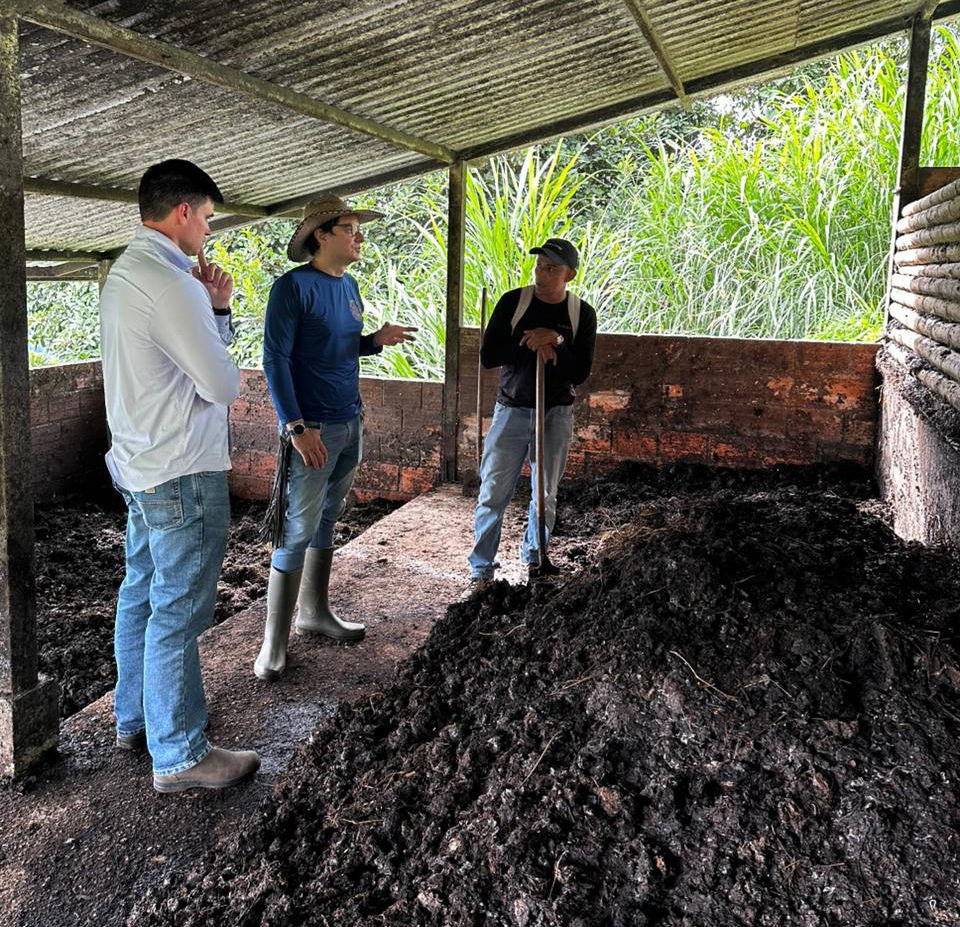
Our assessment of the farms in Colombia revealed that most of them have deficient biological networks. Building and maintaining these networks is the first step of regenerative coffee cultivation and requires an integrated approach with a coordinated set of practices: continuous living cover, the recycling of coffee pulp and processing byproducts as biological amendments, calibrated mineral balancing to optimize nutritional integrity and support microbial activity and intercropping with complementary species that diversify root exudates. These are the stepping stones that we will implement on the path to transition these farms to be regenerative. Each practice is site specific and must be adapted to the soil chemistry, microclimate, and successional state of a particular farm. Each can be evaluated by a single criterion: whether or not it strengthens the biological systems that produce the crop.
When those systems are intact, the practical benefits compound throughout the farm. Soils with active microbial communities and stable aggregate structure retain water through dry seasons, buffer the temperature extremes that increasingly disrupt flowering and bean development, and continue supplying nutrition through the climatic disruptions projected for coffee-growing regions over the coming decades. The soil principle is foundational because everything else built on a coffee farm—the canopy, the harvest, the livelihoods—remains viable only as long as the biology beneath it does.